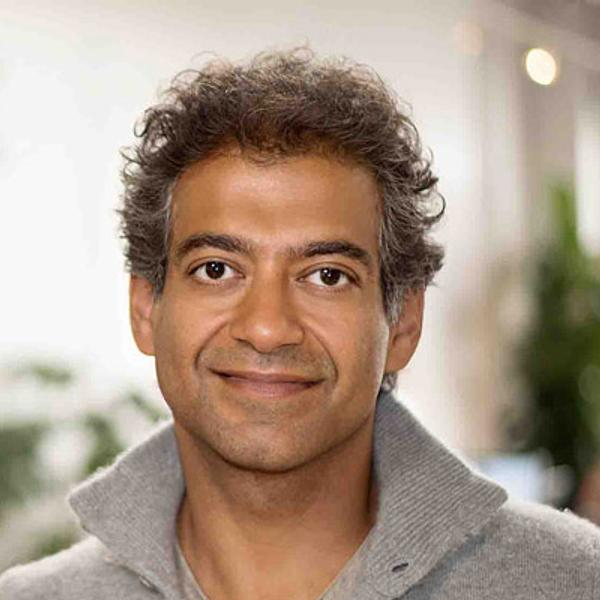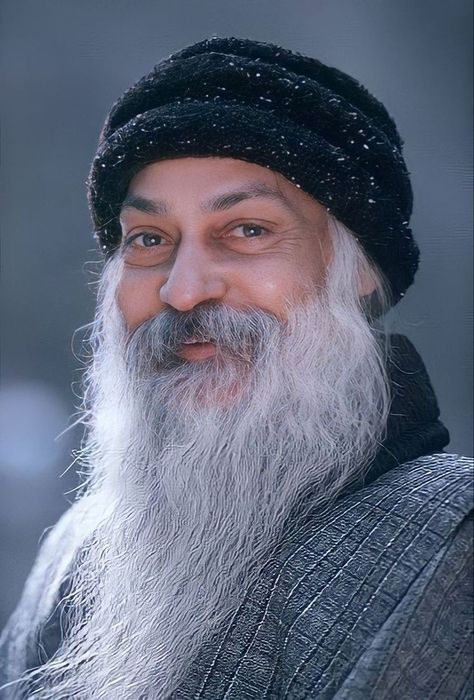
Osho (1931–1990) was an Indian spiritual master who challenged conventional religion and encouraged millions to explore consciousness through meditation and self-inquiry. He established communes worldwide and authored hundreds of books interpreting spiritual traditions, most famously offering contemporary commentary on Zen, Tantra, and Eastern philosophy.
79 Books Recommended by Osho
Ranked by popularity across all reading lists on this site
Siddhartha
17 people recommendedOne of the greatest books in the world... Siddhartha had become a Buddha in his own right. Hesse came very close to the Eastern way of looking at things — this book represents the innermost depth of our being.
Also recommended by: Naval Ravikant, Bryan Johnson, David Blaine, Emma Watson, Fred Wilson, Harry Styles, Jack Edwards, James Clear, Justin Kan, Lex Fridman, Navdeep Chandel, Neil Strauss, Patrick Oshaughnessy, Phil Jackson, Tim Ferriss, Wim Hof
Tao Te Ching
12 people recommendedTo ignite the flame of individual awareness and insight... these are real poetries although they are not compiled in any poetic way. It is not a set of rules but a mechanism to ignite the flame.
Also recommended by: Naval Ravikant, Jack Dorsey, Brian Mackenzie, Jack Ma, Jason Ferruggia, Jason Nemer, Josh Waitzkin, Michael Gervais, Rick Rubin, Soman Chainani, Stewart Brand
Anna Karenina
12 people recommendedEach one of these books is life changing and full of love. Tolstoy understood the agony and ecstasy of human relationships with a depth no other novelist has reached.
Also recommended by: Peter Thiel, Oprah Winfrey, Sam Altman, Chelsea Handler, Austen Allred, Bret Easton Ellis, Ernest Hemingway, Jen Wilkin, Jennifer Lawrence, Jordan Peterson, Laura R Walker
Jonathan Livingston Seagull
9 people recommendedA modern myth for the soul's desire to transcend the limitations of the flock. It does not belong to the standard measurements of the world — it is a real outsider.
Also recommended by: Ev Williams, Vinod Khosla, Ed Latimore, Fred Wilson, Laird Hamilton, Mike Maples Jr, Peter Attia, Wim Hof
The Prophet
7 people recommendedI could easily drop The Prophet for the simple reason that it is only an echo of Friedrich Nietzsche's Thus Spake Zarathustra. But in a world full of liars and etiquette, even an echo of honesty is beautiful.
Also recommended by: Naval Ravikant, Carlos Slim, Jason Nemer, Kelly Slater, Peter Mallouk, Tim Ferriss
War and Peace
7 people recommendedRecommended for its epic scale and profound human insight. Tolstoy puts the whole of life before you — not to entertain but to shake you awake. Few novels accomplish what this one does.
Also recommended by: Christopher Hitchens, Ernest Hemingway, Jordan Peterson, Larry King, Mark Manson, Nelson Mandela
The Brothers Karamazov
5 people recommendedA few pieces in Fyodor Dostoevsky's Brothers Karamazov are pure poetry... he would have served humanity immensely. He reaches the peak of human understanding.
Also recommended by: Ernest Hemingway, Hillary Clinton, Jordan Peterson, Russell Moore
Leaves of Grass
3 people recommendedThey are not enlightened, but very close, just on the verge; one push and they will be in. Whitman has the stupefying courage to see through the chinks of human armor.
Also recommended by: Kevin Kelly, Rolf Potts
The Dhammapada
3 people recommendedThe meditation of the East... but the person who is dead while he is alive will be alive when he is dead. The Dhammapada is the distilled essence of Buddha's forty years of teaching.
Also recommended by: Steve Jobs, Dr Gabor Mate
Zorba the Greek
3 people recommendedZorba is a beautiful man... enjoying small things... Zorba the Buddha is a totally new human being. He has no fear of hell, no greed for heaven — he lives moment to moment with total intensity.
Also recommended by: Jordan Peterson, Tim Ferriss
The Way of Zen
3 people recommendedWatts is praised for being a Western mind who has come very close to the Eastern way. He never claimed to be enlightened — but he pointed in the right direction with extraordinary beauty.
Also recommended by: Naval Ravikant, Steve Jobs
Das Kapital
3 people recommendedIncluded as a foundational analysis of the economic and social structures of humanity. Marx diagnosed a real disease — the problem is his medicine is worse than the sickness. But the diagnosis must be read.
Also recommended by: Elon Musk, Noam Chomsky
Bhagavad Gita
2 people recommendedThe 'Divine Song' — it serves as an inquiry into the ultimate. Krishna speaks from a state of total freedom, and every word vibrates with that freedom.
Also recommended by: Paulo Coelho
The Will to Power
2 people recommendedRecommended as the posthumous collection of Nietzsche's most radical intellectual inquiries. Nietzsche was on the verge of a great breakthrough — and this book is the record of his struggle at the very edge.
Also recommended by: Jordan Peterson
I and Thou
2 people recommendedExplores the relational nature of existence and the meeting with the divine. When you truly meet another — not as an object but as a presence — that is the moment of prayer.
Also recommended by: David Heinemeier Hansson
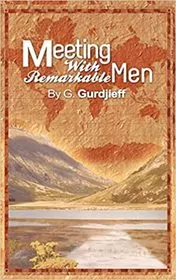
Meetings with Remarkable Men
2 people recommendedA spiritual autobiography that captures the search for hidden knowledge. Gurdjieff's search took him across the world — from the Caucasus to Central Asia, from Egypt to Tibet — always in search of the real.
Also recommended by: Steve Jobs
Principia Mathematica
2 people recommendedIncluded as a peak of human intellectual and logical effort. Russell and Whitehead pushed logic to its absolute limits — and in doing so, showed exactly where logic ends and something beyond begins.
Also recommended by: Christopher Hitchens
Thus Spake Zarathustra
Thus Spake Zarathustra is going to be the bible of the future... it is said that Zarathustra laughed when he was born. Laughter is the only language the unknown can speak when it finds a home in the human heart.
The Book of Mirdad
It's the greatest book I've read till now... the creator of The Book of Mirdad is standing just at the door. It has intellectual honesty of a rare kind — a strange story of a monastery that serves as an ark for the soul.
The Parables of Chuang Tzu
He was the most lovable man, and this is the most lovable book... Chuang Tzu stands separate as a class. He was a rascal saint — playful and full of laughter.
The Sermon on the Mount
The whole Bible is just bullshit except the Sermon on the Mount... I consider these to be real poetries. This is where Jesus speaks from the heights, not from dogma.
Gitanjali
It means 'an offering of songs'... words are so poor when it comes to what Tagore pours into this collection. He touches the divine with the simplest language.
The Hundred Thousand Songs of Milarepa
Valued for its raw, spontaneous spiritual expression. Milarepa sings from a place of total realization — his songs are not composed but erupted from his being.
The Book of the Sufis
Foundational to the Sufi path of the heart. The Sufis speak not from the head but from the very center of their being — each story is a door.
The Book of Lieh Tzu
Lieh Tzu I forgot, and he is the very culmination of both Lao Tzu and Chuang Tzu. He is a disciple of a disciple, yet his work has immense beauty — perhaps the most refined of the three.
Dialogues of Socrates
Plato is not worth mentioning... but his Dialogues of Socrates and his Death is impossible to overpraise. Socrates lives through Plato's pen — he never wrote, and yet he spoke the most.
Notes of the Disciples of Bodhidharma
Valued as a record of the master who brought Zen from India to China. Bodhidharma's transmission was not of words but of silence — and yet these notes carry that silence.
Rubaiyat
A poetic celebration of the present moment, often misunderstood as mere hedonism. Khayyam is speaking of a spiritual intoxication — the wine he speaks of is not the wine of the tavern.
Masnavi
Only a connoisseur of the flavors of love can comprehend the language of a lover's heart. Rumi writes from the very peak of longing — every verse is a prayer.
Isa Upanishad
One of the most ancient and profound Indian sutras focusing on the nature of reality. In just eighteen verses, it contains the whole of existence.
All and Everything
A monumental work of esoteric psychology and mythology. Gurdjieff was one of the most extraordinary men of the twentieth century — and this book is impossible to read and impossible to put down.
In Search of the Miraculous
Tremendously beautiful... Ouspensky's book represents Gurdjieff far more clearly than Gurdjieff's own. A disciple sometimes sees the master more clearly than the master sees himself.
Hsin Hsin Ming
The Zen understanding of mind and consciousness. Sosan writes with absolute precision — every word is a pointer to the wordless. This is one of the most important documents in existence.
Tertium Organum
Recommended for its exploration of higher logic and the expansion of consciousness. It proposes a third logic beyond Aristotle and Bacon — this is the leap the modern seeker needs to break free from mediocrity.
Geet Govinda
A devotional classic celebrating the love of Radha and Krishna. Jayadev uses the language of human love to speak of the divine union — and the poetry rises to supreme heights.
Samayasar
A central text of Jain philosophy focusing on the essence of the soul. Kundkunda speaks of the self that is untouched by anything — the pure witness that watches everything and is caught in nothing.
The First and the Last Freedom
Every one of these books is life changing and full of love. Krishnamurti is ruthless in his clarity — he strips away every belief and leaves you naked before the truth.
The Book of Huang Po
Hui Hi and Huang Po are masters who 'impart' rather than 'teach.' These masters do not transfer information — they transfer a state of being. There is a tremendous difference.
The Book of Hui Hai
Libraries will typically list it as The Teachings of Hui Hai — but Hui Hai does not teach, he imparts. That single word makes all the difference in the world.
The Song of Solomon
Recommended for its raw and beautiful expression of erotic and divine love. The priests have always been embarrassed by it — which is exactly why it is the most alive part of the entire Bible.
Fragments of Heraclitus
All things come in their due seasons... Heraclitus stands separate as a class. He is the first Western mystic — a man who knew the logos not as a concept but as a living fire.
The Golden Verses of Pythagoras
Recommended for the foundational wisdom of the Ionian Greek tradition. Pythagoras was not just a mathematician — he was a mystic who understood that number and music are the language of existence.
The Royal Song of Saraha
The first thing is to be available to joy. Saraha's song is an explosion of Tantric realization — he sings from the very core of enlightenment, not from a monastery but from life itself.
Song of Mahamudra
A seminal text on the 'Great Gesture' of total relaxation into existence. Tilopa speaks the unspeakable — his song is not a teaching but a transmission from the beyond.
Zen and Japanese Culture
Praised for bridging the gap between Zen philosophy and everyday aesthetic life. Suzuki brought Zen to the West with such grace that it did not lose its perfume in the translation.
Let Go
The Supreme Doctrine — psychological studies in Zen thought. Benoit approaches Zen from the perspective of a Western psychologist and arrives at the very door of enlightenment.
Ramakrishna’s Parables
Recommended for their simple, folk-like wisdom that points to deep spiritual truths. Ramakrishna was perhaps the greatest devotee — a child of God who never became an adult in the ordinary sense.
Aesop’s Fables
Valued for using the animal kingdom to mirror human psychology and morality. Aesop was a genius — he could say in a small fable what philosophers could not say in a thousand pages.
Mula Madhyamika Karika
A monumental work on the 'Middle Way' and the philosophy of emptiness. Nagarjuna is perhaps the sharpest mind that ever existed — he cuts through every concept until nothing remains but the silence.
The Book of Marpa
Recommended as a record of the translator who brought Buddhist teachings to Tibet. Marpa's story is one of the most extraordinary in spiritual history — the master who taught through cruelty and love simultaneously.
Brahma Sutras
Athato Brahma Jigyasa — now the inquiry into the ultimate. Perhaps the greatest book in the East. Alas, could he only have laughed a little! Truth needs no commentary, but seriousness invites commentators who always serve the devil.
Bhakti Sutras
The supreme text on the path of devotion and the science of love. Narada defines love in 84 sutras and each sutra is a jewel — a complete universe in itself.
Yoga Sutras
Reintroduces the foundations of Yoga in a way accessible to everyone. Awareness is the fire that burns the past. Patanjali is scientific in the truest sense — he gives you a map of the inner world.
Jaina Sutras
Recommended for their extreme emphasis on awareness and non-violence. Mahavira was the most logical of all the mystics — every one of his statements can be verified through your own inner experience.
The Declarations of Al-Hillaj Mansoor
Praised for the mystic's ecstatic declaration 'Ana'l Haq' — I am the Truth — for which he was martyred. Mansoor was crucified, yet he died laughing. That is real courage.
The Stories of Baal Shem
Valued for their celebration of the divine in everyday life within the Hasidic tradition. Baal Shem Tov was a man of the earth who found God not in the synagogue but in the fields and the forests.
Vigyana Bhairava Tantra
This magnum opus doesn't require you to change your life — it only requires you to become aware. Shiva gives Devi 112 methods of meditation, and each method is a complete path in itself.
Tatva Sutra
A central Jaina text that systematically describes the reality of the universe. Uma Swati maps the entire cosmos of Jain metaphysics with extraordinary precision and clarity.
Guru Granth Sahib
A collection of songs from various mystics, including Kabir and Nanak, which represents a communal offering of the heart. No other holy book was written by so many enlightened beings.
Songs of Lalla
Essential for understanding the internal alchemy of meditation. Lalla was a woman mystic from Kashmir who walked naked in the streets, singing of God — not out of madness but out of total freedom.
Verses of Gorakh-Nath
Considered essential for understanding the internal alchemy of meditation. Gorakh-Nath is the father of the Nath tradition — his verses map the subtle body with the precision of a master surgeon.
A New Model of the Universe
Explores the intersection of science and esotericism, offering a new vision of reality. Ouspensky was a brilliant mind standing at the crossroads of the scientific and the mystical.
God Speaks
Each one of these books is life changing and full of love. Meher Baba maintained silence for decades — and when he finally spoke in this book, each word carried the weight of that long silence.
Maxims for a Revolutionary
Shaw was an iconoclast in his own way and with an abundance of talent. He punctured the pomposity of the Victorian world with laughter — and laughter is always on the side of truth.
The Sufis
Included as a modern and accessible portal into the world of Sufi wisdom. Shah brought the Sufi tradition alive for the Western reader without reducing it to mere philosophy.
Jesus, the Son of Man
Recommended for its poetic and humanized depiction of Jesus outside the Church. Gibran gives us the Jesus that the priests buried — the rebel, the lover, the man who danced.
Being and Nothingness
A key text of existential inquiry focusing on the radical freedom of the individual. Sartre goes as far as a Western philosopher can go without taking the final leap into meditation.
Being and Time
Explores the fundamental nature of existence and the 'thrownness' of the human condition. Heidegger is one of the most profound Western philosophers — he touches the very ground of being.
Tractatus Logico-Philosophicus
Wittgenstein is the most important philosopher of the 20th century. He pushed language to its very limits and eventually realized that the most important things cannot be said — they can only be shown. That is where philosophy ends and meditation begins.
The Garden of the Prophet
Reminds me of Epicurus because he used to call his commune The Garden. Gibran's garden is not just physical — it is the inner space of silence and beauty that the mystic cultivates.
Alice in Wonderland
Recommended for its exploration of the nonsense and absurdity that mirrors the human mind. Carroll accidentally wrote a meditation manual — Alice's journey through Wonderland is the journey of consciousness discovering itself.
Tales of the Hasidim
Each one of these books is life changing and full of love. Buber collected the stories of the Hasidic masters with the devotion of a true lover — and love is the best preserver of truth.
The Communist Manifesto
Analyzed as part of the social disease and the collective struggle for freedom. It is important to understand where the collective dream went wrong — so that the individual can wake up from it.
Zen Flesh, Zen Bones
A classic collection of Zen stories and the 112 techniques of the Vigyan Bhairav Tantra. Reps compiled this with great love and great understanding — it is one of the most alive books in the world.
My Experiments with Truth
Recommended for its historical and psychological transparency, despite Osho's critiques of the author. Gandhi is honest about his experiments — and honesty, even in a repressed man, is always valuable.
Confessions
Valued for its honest exploration of the transition from sinner to saint. Augustine describes his own darkness with such clarity that the light at the end of his journey becomes all the more luminous.
The Phoenix
Praised for Lawrence's attempt to rehabilitate the natural and sexual nature of man. Lawrence was fighting the same battle I am fighting — to reclaim the body, to say yes to life, to say yes to existence.
The Light of Asia
A poetic rendering of the life of Buddha that served as an early introduction to Zen for many. Arnold brought the Buddha to the West in the most beautiful way possible — through poetry.
One-Dimensional Man
A critique of modern industrial society and its repression of the individual. Marcuse saw what modern civilization does to the human being — it flattens him, makes him one-dimensional, destroys his depth.